



ABOUT THE BOOK
Cutting Through The Babble
The Bible Handbook for Rigorous Classroom Instruction
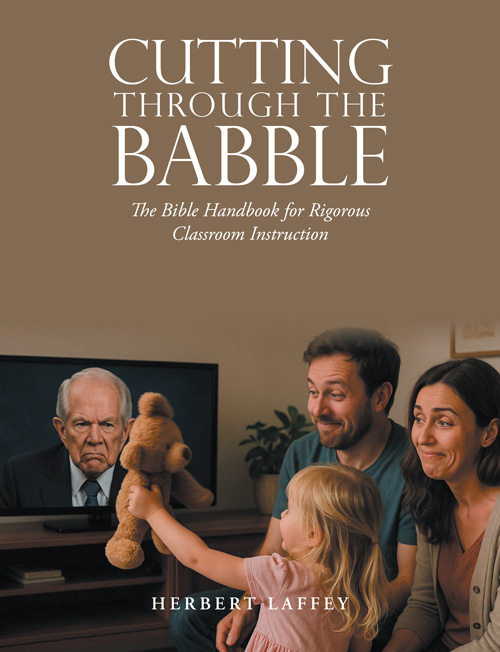
If religion normally glazes your eyes over, this book is for you.
Why do people who read the same Bible come away so certain that it says completely different things? Why should an ancient collection of texts still have so much influence over our politics, morality, relationships, and understanding of ourselves?
Cutting Through the Babble invites you to look again—not by telling you what to believe, but by challenging assumptions and examining the evidence behind them.
If you love Jesus and the word of God, this book is also for you.
In your deepest heart, do parts of the Old Testament seem cruel? Did God really endorse genocide? Why are there different versions of the same stories? Was it Sinai or Horeb—or both? Is science contrary to scripture? Rather than asking you to ignore such questions or explain them away, Babble asks you to confront them.
Behind these questions are people. Babble introduces readers to the biblical writers as individuals shaped by particular times, communities, conflicts, and purposes.It also introduces some of the historians, biblical scholars, and social scientists whose discoveries have transformed what we know about those worlds— and whose work allows ancient volumes to emerge from beneath centuries of accumulated interpretation.
And this is where the stakes become much larger than biblical interpretation.
Ideas born, contested, revised, and sometimes distorted thousands of years ago remain alive in the way we think about authority and freedom, insiders and outsiders, sexuality and morality, wealth and poverty, justice and power.
Understanding how those ideas developed can profoundly transform the way we recognize thier operation in our own relationships, institutions, politics, and society.
That is the promise of Cutting Through the Babble: engage seriously with the evidence, and you may never read the Bible—or the world around you—in quite the same way again.
The Author
Herbert Laffey brings his professional background as a former Catholic Theological student to exposition of Biblical text. With over 30 years’ experience in public school education, working with every age group K to adult, he comfortably integrated the Bible into classroom instruction for the benefit of his students. Currently retired, his perspective is not beholden to any academic or religious institution.
Buy the Book
Have you ever felt constrained by your sponsoring institution? Were you intimidated by the reaction of your colleagues? Have you doubted the practical value of your work? This book relies on the fruit of your efforts and freely produces a consistent, unified theory of the development of the sacred texts. It intuitively analyzes historical contexts, individual circumstances of the various authors, and fearlessly addresses the process of compiling the collections. It does this in a format designed for popular consumption.
